A 63-year-old retired teacher from Mumbai was duped of over Rs32.69 lakh in a chilling “digital arrest” scam, where fraudsters posed as officials from the Anti-Terrorism Squad (ATS) and manipulated her through fear rather than technical hacking.
The victim, who lives in Goregaon East, received a call from individuals claiming to be ATS officers. They falsely accused her of having links to funding the Pulwama Terror Attack, a claim designed to alarm and pressure her into compliance.
The scammers skillfully escalated the deception by switching roles—from an ATS inspector to a Deputy Commissioner of Police—while dropping names of reputed institutions like the Reserve Bank of India and the National Investigation Agency to appear credible.
They further reinforced their narrative by sending fake documents, including FIR copies, arrest warrants, stamped letters, and even a fabricated “immunity certificate.” By this stage, the victim was completely convinced and under their psychological control.
The fraudsters presented the transfer of money as a legal verification process, convincing her to move Rs32.69 lakh into accounts controlled by them.
Police revealed that this was not an isolated incident but part of a broader cyber fraud network. The operation involved rented bank accounts, with each layer of handlers taking around a 3% commission as funds were transferred through multiple accounts.
Arrests in the Case
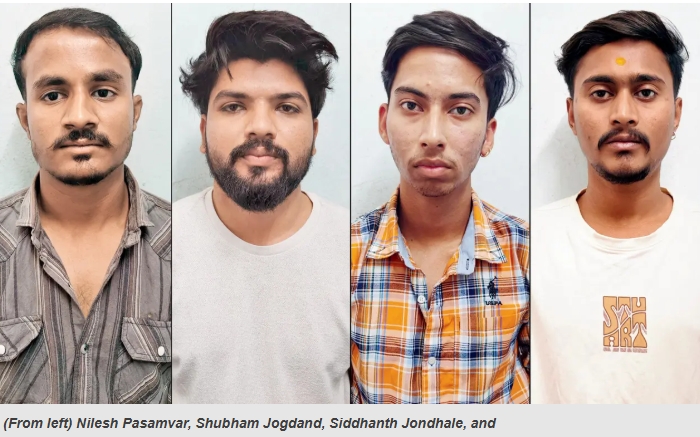
Four suspects were arrested from Nanded:
Nilesh Pasamvar (25)
Shubham Jogdand (25)
Ajay Bhosle (25)
Siddharth Jondhale (19)
In a related case, the North Cyber Police arrested Kiran Kansariya (49), a freelance real estate agent from Bhayandar, for allowing his bank account to be used to route stolen funds.
Investigators found that Rs5 lakh from a Rs91 lakh fraud involving a 75-year-old victim was transferred into Kansariya’s account. A significant portion—Rs81 lakh—was routed to another account in West Bengal.
During questioning, Kansariya allegedly admitted to keeping a commission before withdrawing and handing over the remaining cash to an accomplice in Kandivli. Police believe the money was then sent abroad through a hawala network.
Authorities are continuing efforts to trace the Kandivli-based suspect and dismantle the wider cybercrime network behind these scams.
