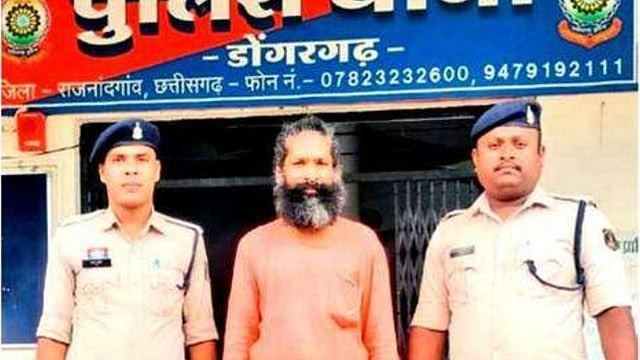
In a shocking twist to Goa’s wellness tourism scene, Tarun Agarwal, the founder of Kranti Yoga in Patnem, South Goa, was arrested by Dongargarh Police with 2 kg of cannabis in his possession. Agarwal, who had allegedly spent nearly 20 years in Goa, is accused of running a sophisticated narcotics racket under the guise of yoga, meditation, and spiritual retreats.
Speaking to O Heraldo, Jitendra Verma, in-charge of Dongargarh Police Station, revealed that Agarwal—who had legally changed his name to Yogi Tarun Kranti Agarwal on his Aadhaar card—was running his beachside retreat as a front for criminal activities. He had recently returned to Dongargarh to set up an ashram, replicating the model he had established in Goa.
Over the years, his Patnem centre attracted foreign tourists, many of whom paid premium rates for detox workshops, retreats, and healing sessions. Underneath the legitimate facade, however, police believe Agarwal was building a network for drug distribution and money laundering.
“His operation was clean on the surface, but we discovered a web of NGOs and suspicious foreign funding,” Verma said. Over 10 NGOs linked to Agarwal are now under scrutiny by investigative agencies for possible financial crimes and NDPS Act violations.
Residents in Canacona reported a frequent foreign presence at his yoga centre, but no prior criminal complaints were filed against Agarwal in Goa. According to PI Harish Raut Desai of Canacona Police Station, “He had never been linked to any criminal case locally.”
Authorities also seized foreign-imported boxes, electronic equipment, and video material from his Dongargarh property. These are now being traced for origins and links to Goa.
This case adds to growing concerns over Goa becoming a safe haven for white-collar and narcotics-linked fugitives. In recent months, crypto fraudsters, scamsters, and drug offenders have all been found hiding or operating businesses across Goa’s tourist belt.
Former SP Bossuet D’Silva commented, “Tourism has become a cover for criminal activities. The breakdown in grassroots policing has allowed such elements to go unchecked.”
