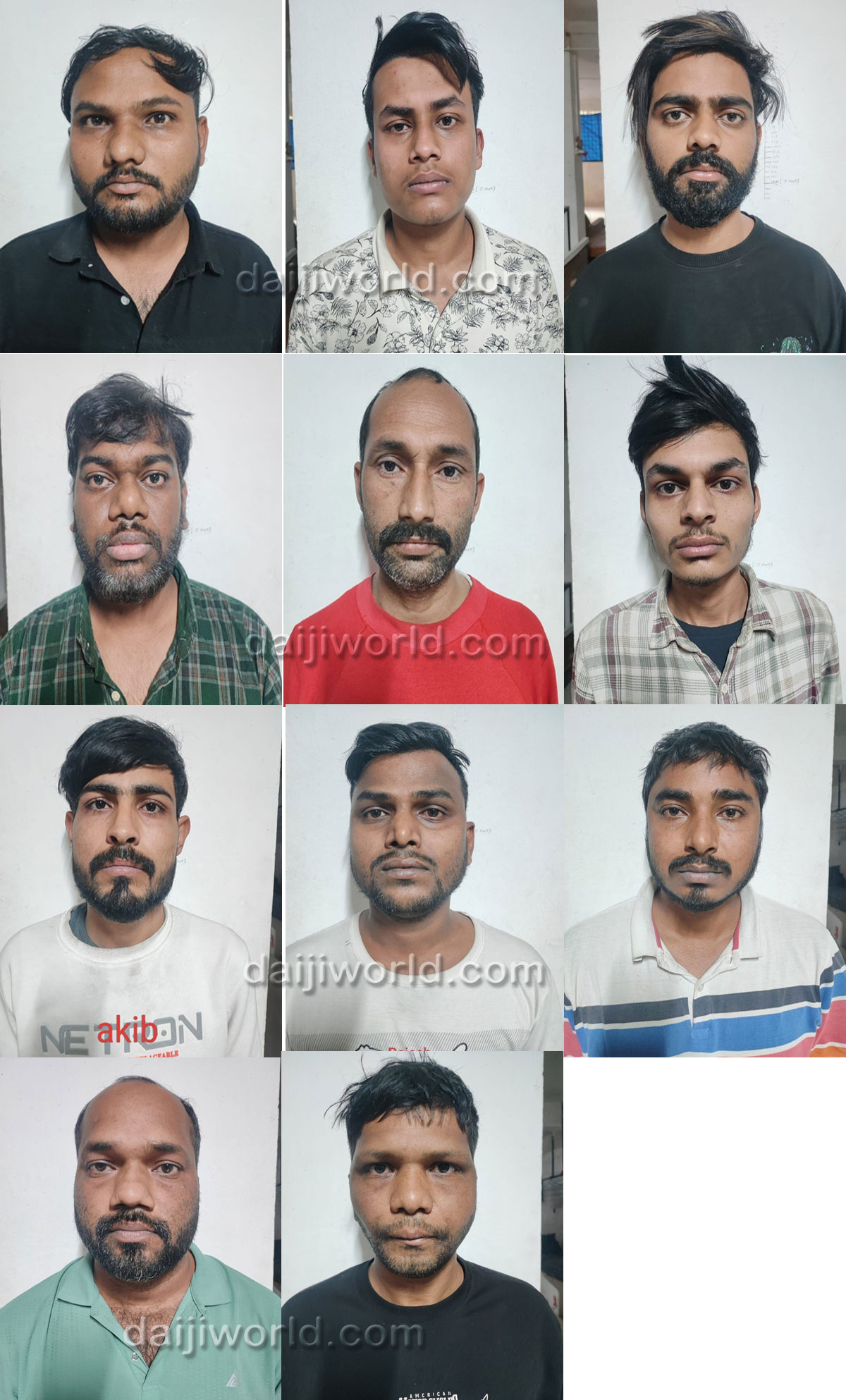
The Mangaluru City Crime Branch (CCB) police have busted a massive interstate and international online investment fraud racket operating from Nepal, arresting 11 accused for cheating Indian investors of hundreds of crores of rupees, city police commissioner Sudheer Kumar Reddy said at a press conference on Thursday, February 5.
According to the commissioner, the fraud syndicate comprised Indian and Chinese nationals and was operating primarily from Nepal while targeting victims across India through online platforms. While 11 Indian nationals have been arrested by the Mangaluru CCB police, Chinese nationals linked to the racket have been arrested by Nepal police. Five Indian accused remain absconding, and efforts are underway to trace them.
Investigations revealed that the accused used social media platforms to lure investors with promises of unusually high returns. Analysis of seized mobile phones and laptops led to the detection of 624 bank accounts, against which more than 4,580 complaints have been registered nationwide on the NCRP portal. In one bank account alone, transactions amounting to Rs167 crore were found.
In the specific case registered at the Mangaluru CCB police station, fraudsters diverted around Rs30.70 crore through 10 bank accounts. Verification of the remaining 623 accounts is currently in progress, police said.
The case has been registered as CCB Police Station Crime No. 02/2026 under Sections 66(C) and 66(D) of the IT Act and Sections 318(4) and 308(5) of the Bharatiya Nyaya Sanhita. The complainant in the case was cheated of Rs1.38 crore, which was routed through 10 different bank accounts. Technical analysis confirmed that the operations were being controlled from Nepal.
Police explained that one group of fraudsters operated from Nepal by recruiting bank account holders and agents through social media. The defrauded money was routed through multiple accounts, converted into USDT cryptocurrency, and transferred abroad. Another group, operating from Cambodia, Dubai and other countries, contacted investors via social media platforms. Indians working abroad were used to communicate with victims in local languages and persuade them to invest more.
In the 10 bank accounts linked to the Mangaluru case alone, around 128 complaints and 36 FIRs have been registered across the country.
The fraudsters also created fake advertisements on Instagram and Telegram, offering commissions of 5–10%, along with incentives such as flight tickets, cab services and accommodation. Victims were taken to Nepal or Dubai, where their SIM cards were inserted into phones controlled remotely by the gang to carry out fraudulent transactions.
Police revealed that the gang was cheating Indian investors of Rs60 lakh to Rs1 crore every day through such scams. Commissioner Reddy warned youth seeking overseas jobs against falling for fake job offers, stating that many victims are trafficked on tourist visas, have their passports seized and are forced into cyber fraud activities under inhuman conditions.
In Dakshina Kannada district, six victims have already been rescued from such cyber slavery, and cases have been registered based on their complaints.
Police cautioned that recovery becomes difficult as funds are converted into cryptocurrency and transferred abroad the same day. Those providing bank accounts for commission will also be treated as accused under the law.
Citizens were advised to invest only through SEBI-registered brokers and avoid high-return promises, fake demat accounts and fake SEBI certificates. Police urged victims to immediately dial 1930 and lodge complaints within one hour of detecting fraud.
