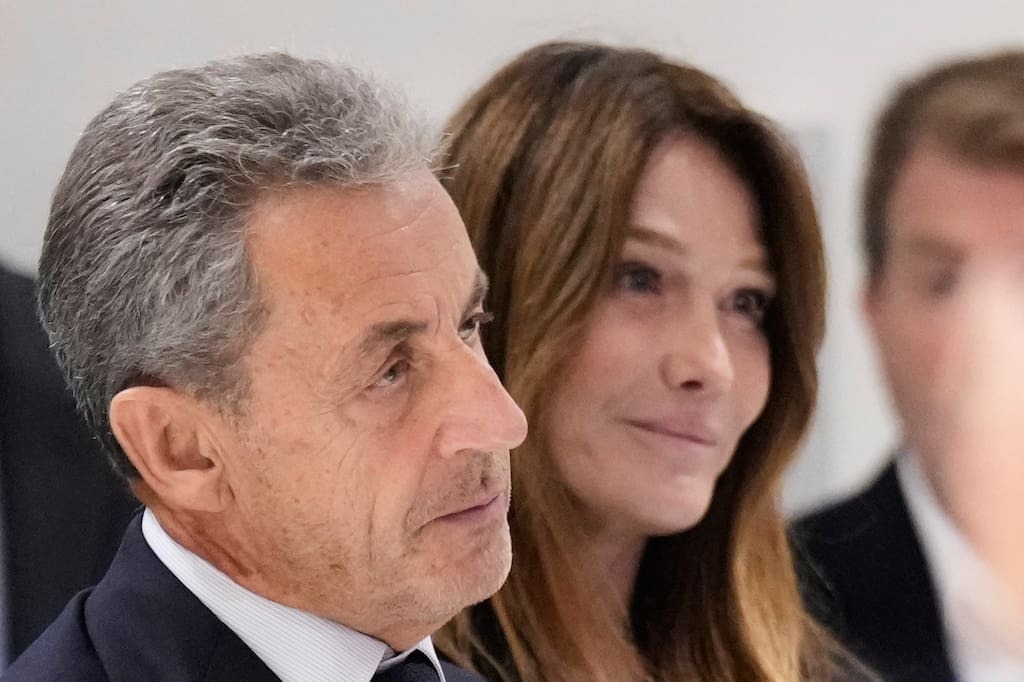
In a historic verdict, former French President Nicolas Sarkozy has become the first modern-era ex-president of France to be sentenced to actual prison time. The 70-year-old was convicted of criminal association in a plot to illegally finance his 2007 presidential campaign with funds from Libya in exchange for diplomatic favors.
The Paris court found that between 2005 and 2007—while Sarkozy was serving as interior minister—he and his associates secretly engaged with Libyan officials to secure campaign funds. The ruling did not confirm with certainty that Libyan money directly financed the campaign but held that the corrupt scheme itself constituted a crime under French law.
Despite his conviction, Sarkozy intends to appeal. The court deferred setting his prison start date, sparing him the immediate indignity of being led away in handcuffs.
Sarkozy, joined by his wife Carla Bruni-Sarkozy, denounced the ruling as a humiliation for France and an injustice against him personally. “If they want me to sleep in prison, I will sleep in prison. But with my head held high. I am innocent,” he said.
The court also convicted two of Sarkozy’s former ministers and close allies, Claude Guéant and Brice Hortefeux, for criminal association. Hortefeux received a two-year sentence with electronic monitoring, while Guéant was sentenced to six years but was not immediately incarcerated due to health reasons.
The investigation uncovered secret 2005 meetings between Sarkozy’s associates and Abdullah al-Senoussi, the intelligence chief and brother-in-law of late Libyan dictator Muammar Gadhafi. These contacts involved negotiating a “corruption pact” that included promises of diplomatic favors and support for Libya’s nuclear ambitions.
Sarkozy’s political career has been marred by multiple legal battles, including convictions for corruption and illegal campaign financing in separate cases. He is currently appealing previous rulings.
The Libyan funding allegations date back to 2011, when Gadhafi’s regime allegedly funneled millions of euros into Sarkozy’s campaign. A purported Libyan intelligence memo surfaced in 2012 but was later deemed likely a forgery by the court.
Throughout the trial, Sarkozy insisted the claims were a politically motivated vendetta by the “Gadhafi clan” in retaliation for his call for Gadhafi’s removal during the 2011 Libyan uprising.
This sentencing adds a dramatic chapter to Sarkozy’s complex legacy, highlighting issues of corruption, international intrigue, and political fallout that continue to reverberate in France.
