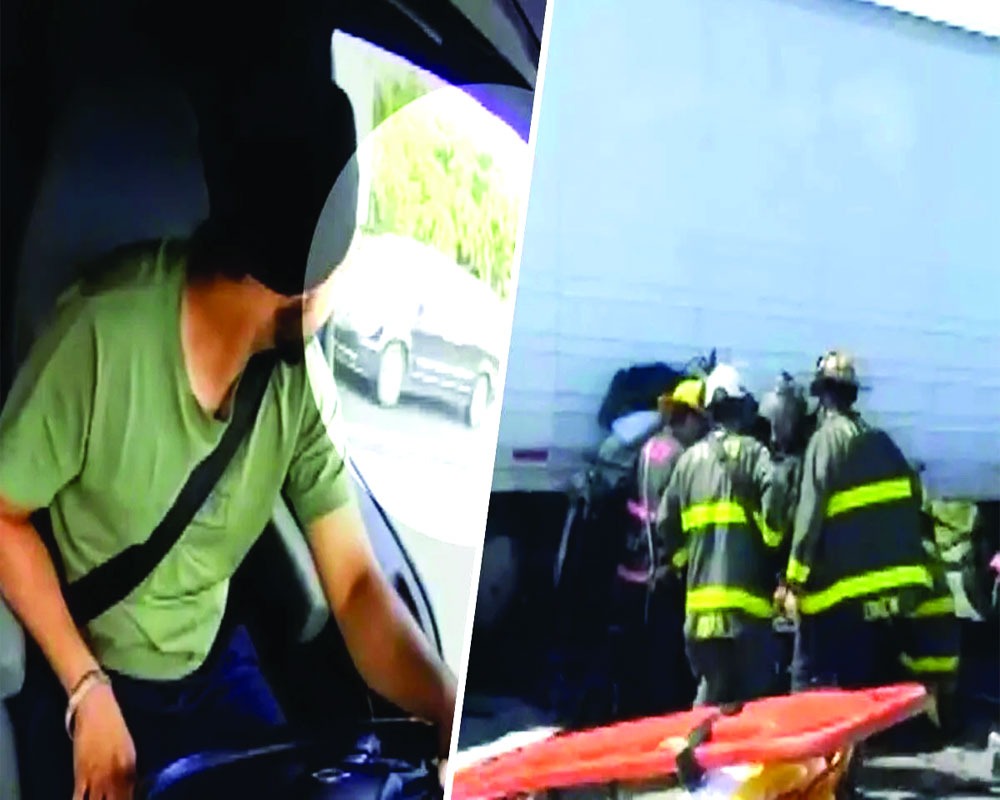
Harjinder Singh, 28, entered the United States through the southern border claiming persecution in India due to his support for the Khalistan independence movement. Recently, while driving a large truck, known in the U.S. as a “Big Rig,” he made an illegal U-turn, resulting in a collision with a vehicle carrying three Haitian immigrants, all of whom tragically died.
Since the accident, Singh has received significant backing from figures such as Gurpatwant Pannun, who offered $100,000 to the victims’ families as “blood money,” and Akali Dal MP Harsimrat Kaur Badal, who has requested leniency from India’s Ministry of External Affairs. Supporters have also advocated for relaxed English language requirements for commercial drivers, despite evidence Singh did not speak or understand English at his arraignment, raising questions about how he secured such a job.
While some have framed Singh’s actions as a “small mistake” and accused authorities of racism, the backlash from nationalist groups highlights that consequences are inevitable. Singh faces up to 45 years in prison in the U.S., followed by deportation.
This case has spotlighted a troubling trend: the North American long-haul trucking industry has become dominated by immigrants from Punjab and Haryana, many entering illegally. Thousands file asylum claims citing Khalistan persecution—an insurgency largely defunct except as a cover for trafficking operations. After initial asylum denials, many submit dubious evidence, such as “voter cards” from a Khalistan referendum in Canada, to bolster their claims.
While a few extremists exist, the Khalistan movement has morphed into a massive human trafficking scheme. Young men are funneled into low-wage trucking or criminal enterprises, including drug cartels. Women are often coerced into prostitution. These individuals pay exorbitant fees to agents who facilitate illegal entry via routes through Latin America or fraudulent educational institutions.
Organizers maintain the illusion of an active Khalistan movement to sustain a flow of cheap labor and vulnerable women. Well-funded protests and international media attention help perpetuate this facade, enabling thousands to claim persecution, especially following events like the farmers’ protests. Allegations of influence over Canadian officials further fuel the racket.
The ongoing Harjinder Singh case threatens to disrupt this illicit network. The FBI, led by Director Kash Patel, has begun cracking down on these operations. Yet, India’s Punjab state government also bears responsibility for failing its youth, whose economic despair and rampant drug abuse drive them to such desperate measures. Recent floods worsening farmland conditions may exacerbate this exodus.
While Harjinder Singh must be held accountable under U.S. law, governments in New Delhi and Chandigarh must actively combat this crisis by revitalizing Punjab’s economy and educating youth about the risks of trafficking and organized crime.
