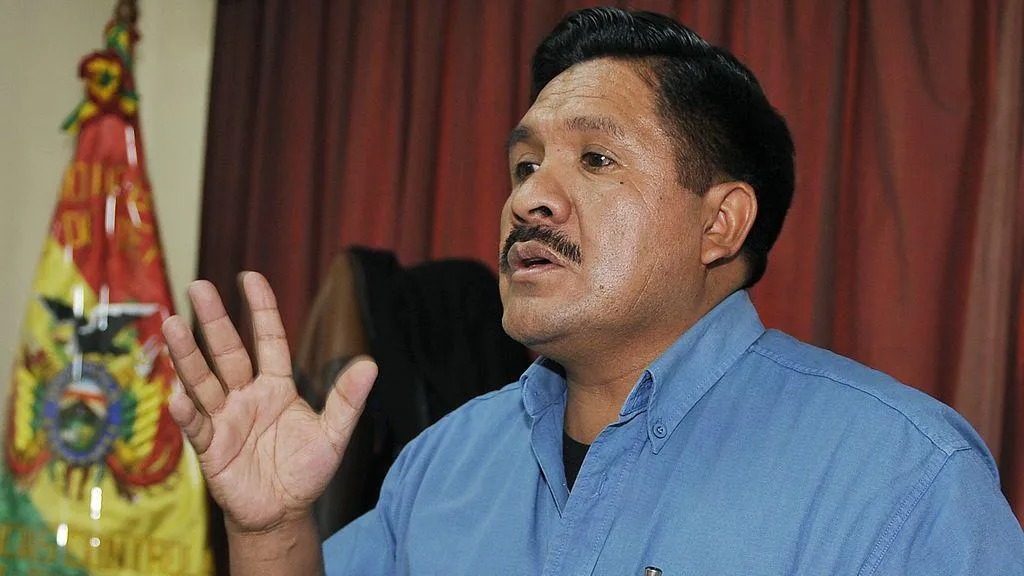
BOLIVIA – Former Bolivian counternarcotics chief Felipe Cáceres was arrested Tuesday after authorities discovered a cocaine lab on one of his properties in Puerto Villarroel, located in the coca-rich Cochabamba region.
Cáceres, 63, served as Bolivia’s top official for controlled substances from 2006 to 2019, overseeing national efforts to combat illegal drug production. Before that, he was a leader in a coca-growers’ union—a role common among Bolivian political figures tied to the region’s coca-growing culture.
Police say they found a fully operational cocaine hydrochloride lab, reportedly large enough to employ 10 workers, on land owned by Cáceres. He was detained 500 meters away at a sand and gravel plant he also owns.
Interior Minister Roberto Ríos stated that while the lab was located on property registered to Cáceres, investigators have not yet confirmed whether he directly operated or controlled the drug lab.
This development adds to an ongoing series of scandals involving Bolivia’s anti-drug agencies. One former head of the country’s counternarcotics police is awaiting trial in the United States on drug smuggling charges, while another is already imprisoned for trafficking.
Despite the arrest, former President Evo Morales—under whom Cáceres served—called the incident a “set-up”, claiming the current government is using the case to distract from its own controversies. Morales declined to provide further details.
A lawyer affiliated with Morales’ political party also emphasized the need for concrete evidence linking Cáceres directly to the cocaine lab.
Bolivia, the world’s third-largest producer of cocaine after Colombia and Peru, allows up to 22,000 hectares of coca cultivation for traditional and medicinal use. However, any excess is illegal and subject to eradication.
While coca leaves have long been a part of Bolivia’s culture—used in teas and religious ceremonies—the production of cocaine remains strictly prohibited.
Authorities say the investigation into Cáceres’ role is ongoing.
