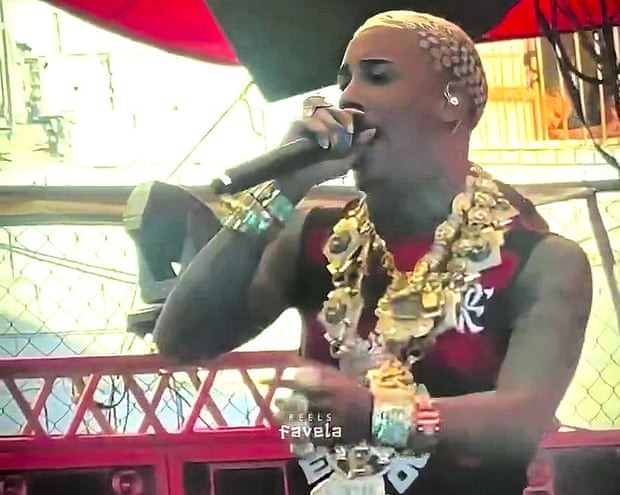
RIO DE JANEIRO — The arrest of funk star MC Poze do Rodo has ignited national debate in Brazil, with artists, legal experts, and activists denouncing what they call the criminalization of Black culture and artistic expression.
The 26-year-old singer, whose real name is Marlon Brendon Coelho Couto da Silva, was arrested at his upscale home in Rio’s west zone early Thursday morning. Known for his powerful narratives of favela life and with over 5.8 million Spotify listeners, Poze was taken into custody shirtless and barefoot—an image replayed across Brazilian media that many called degrading and unnecessary for a non-violent offense.
Authorities claim his lyrics glorify drug trafficking and firearms and allege that his concerts were financed by the Comando Vermelho, one of Brazil’s largest criminal organizations.
“This is persecution,” Poze told reporters as he was transferred to jail. “There is no evidence.”
The arrest has fueled concerns over the systemic repression of funk music, a genre born in the favelas and deeply rooted in Black identity. Critics argue it follows a long-standing pattern of targeting cultural expressions associated with Afro-Brazilians—similar to the past criminalization of samba, capoeira, and Afro-Brazilian religions.
Pierpaolo Cruz Bottini, a criminal law professor at the University of São Paulo, said there’s no legal basis for the charge of inciting crime. “His songs describe reality; they don’t promote it,” he said. He also condemned the way Poze was arrested, saying there was no sign of resistance or attempt to flee.
Poze, who once admitted in a TV Globo interview to a troubled youth involving drug trafficking, has since used his platform to steer others away from crime. “Crime doesn’t lead anywhere,” he said at the time.
Support has poured in from other artists, including MC Cabelinho, who questioned why actors playing criminals in soap operas or films aren’t similarly accused of promoting crime.
Anthropologist Mylene Mizrahi, a professor at PUC-Rio, emphasized the double standard: “When Martin Scorsese makes a mafia film, he’s celebrated. When a funk artist talks about real life, he’s arrested.”
Joel Luiz Costa, director of the Black Population Defence Institute, called the arrest part of a wider historical trend. “They can’t outlaw being Black, so they criminalize what’s associated with Blackness—funk music is the latest target.”
As debate over freedom of expression and racial inequality deepens in Brazil, Poze’s case could become a defining moment in the fight against cultural and racial criminalization.
